New Interview for the GRPS Uncovered podcast

GRPS Uncovered is a project started by Professor Leanne Kang, who currently teaches at GVSU and is the author of the book, Dismantled: The Breakup of an Urban School System: Detroit, 1980–2016.

In this episode, Dr. Kang interviews Betsaida Valdivia. Betsaida is a former GRPS student who talks about  how their time in the district during the 2010s shaped their understanding of education, opportunity, and student voice — a journey that now guides their work as Youth Education Organizer for the Urban Core Collective.

So far, GRPS Uncovered has produced ten episodes, which you can listen to at this link. All ten episodes shed light on important history in the Grand Rapids Public Schools.

These oral histories are critical not only for our understanding of this history, but because they provide insight into the lived history of people, many of which we are not familiar with.

We encourage you to listen and share these podcasts and use them as teaching tools for learning local history and as a resource to potentially impact current policies at the GRPS.

Posted in GRPS | Tagged , | Leave a comment

New GRPS Uncovered podcast for 7/7/2025

GRPS Uncovered is a project started by Professor Leanne Kang, who currently teaches at GVSU and is the author of the book, Dismantled: The Breakup of an Urban School System: Detroit, 1980–2016.

In this episode, Dr. Kang interviews Dennis Miller, a retired school security officer who, at the age of 19, began his career in GRPS in 1987.

So far, GRPS Uncovered has produced nine episodes, which you can listen to at this link. All nine episodes shed light on important history in the Grand Rapids Public Schools.

These oral histories are critical not only for our understanding of this history, but because they provide insight into the lived history of people, many of which we are not familiar with.

We encourage you to listen and share these podcasts and use them as teaching tools for learning local history and as a resource to potentially impact current policies at the GRPS.

Posted in GRPS | Tagged , | Leave a comment

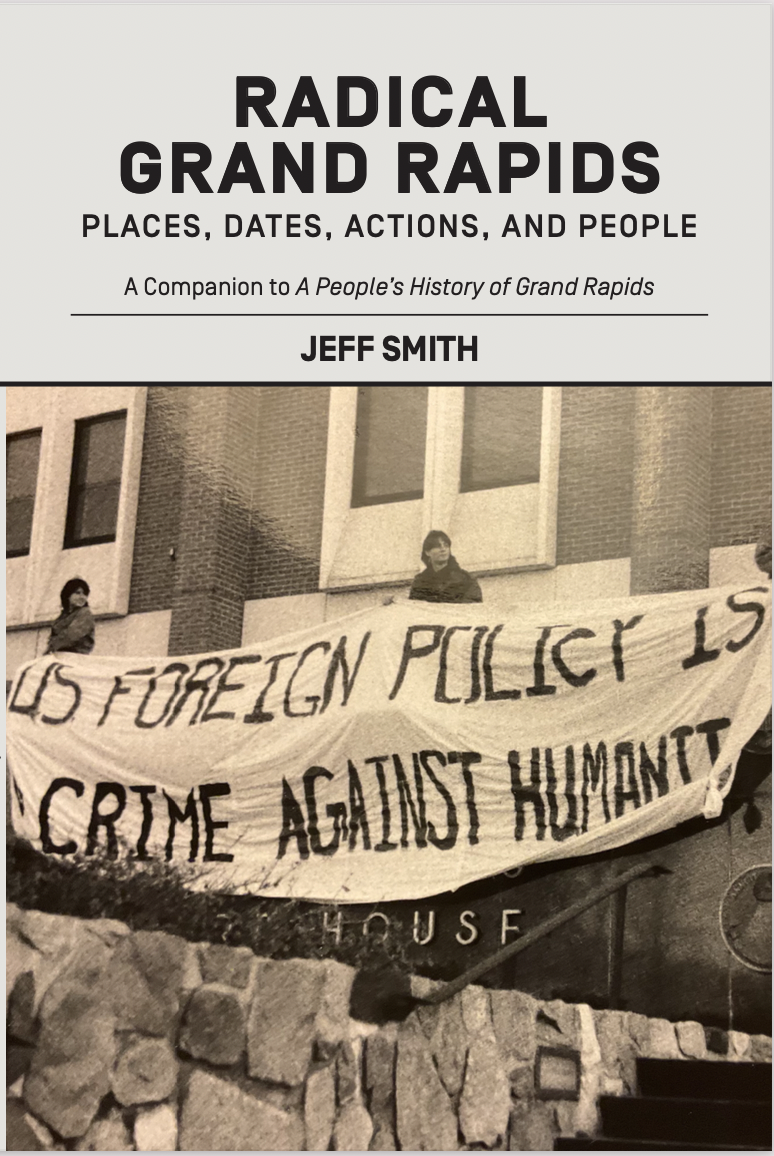
Radical Grand Rapids: Places, Dates, Actions and People

My new book, Radical Grand Rapids: Places, Dates, Actions and People, which is a companion to, A People’s History of Grand Rapids, is now available.

You can purchase the book from Schuler Books, directly from sjeff987@gmail.com. Below is an image of the Table of Contents and the front cover of the book.

Posted in Uncategorized | Leave a comment

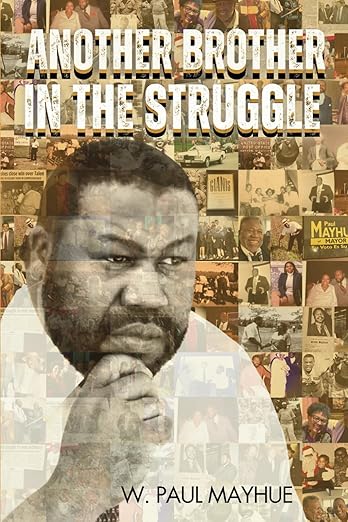
New book by long time community activist Paul Mayhue: Another Brother in The Struggle

Paul Mayhie recently reached out to us and asked us to post something about his new book, Another Brother in The Struggle.

Here is the description that comes with the book:

From the raw fields of Arkansas to the tumultuous streets of Grand Rapids, Michigan, W. Paul Mayhue’s life is a testament to resilience in the face of adversity. In “Another Brother in the Struggle”, Mayhue chronicles his remarkable journey of courage, determination, and an undying commitment to justice.

Born in a shanty house to a family with meager means, Mayhue’s story begins with his earliest battle against a mosquito, a seemingly small event that sets the stage for the numerous struggles he would face. Transitioning from country life to city life, he faced both societal and personal challenges head-on.

School wasn’t easy—between bullies and the pressure to maintain grades, Mayhue found solace and strength on the athletic field. But the challenges didn’t end there. Drafted into the army in the pivotal year of 1968, he narrowly avoided active duty, choosing instead to stand guard at home where a different kind of war raged. The assassination of Dr. Martin Luther King Jr. had set the streets alight with fury and grief, and Mayhue bore witness to countless innocents trapped in a struggle they hadn’t chosen.

But rather than succumb, Mayhue decided to fight—in the noblest way possible. Delving into politics, he became a beacon of hope for those who felt voiceless, tirelessly advocating for their rights and aligning with likeminded souls in a collective quest for equality and justice.

ANOTHER BROTHER IN THE STRUGGLE is more than a memoir—it’s a reflection on the indomitable spirit of a man and an era. Dive into this gripping tale of survival, ambition, and the enduring power of the human spirit against all odds.

You can get a copy by contacting the author directly paulmayhue@icloud.com or by going on Amazon.com.

Posted in Uncategorized | Leave a comment

New Grand Rapids podcast sheds light on the history of the Grand Rapids Public Schools

A new podcast called, GRPS Uncovered, takes a critical look at the history of the Grand Rapids Public Schools, through interviews with people who went to school in this district. 

GRPS Uncovered is a project started by Professor Leanne Kang, who currently teaches at GVSU and is the author of the book, Dismantled: The Breakup of an Urban School System: Detroit, 1980–2016.

So far, GRPS Uncovered has produced five episodes, which you can listen to at this link. All five episodes shed light on important history in the Grand Rapids Public Schools, but I was particularly drawn in by episode 2, which is an interview with a former white student who attended South High and was part of the bus program, where he was bused to Union High School, which was completely opposed to Black students attending the then all white high school. 

These oral histories are critical not only for our understanding of this history, but because they provide insight into the lived history of people, many of which we are not familiar with. 

We encourage you to listen and share these podcasts and use them as teaching tools for learning local history and as a resource to potentially impact current policies at the GRPS. 

Share this:

Posted in Uncategorized | Leave a comment

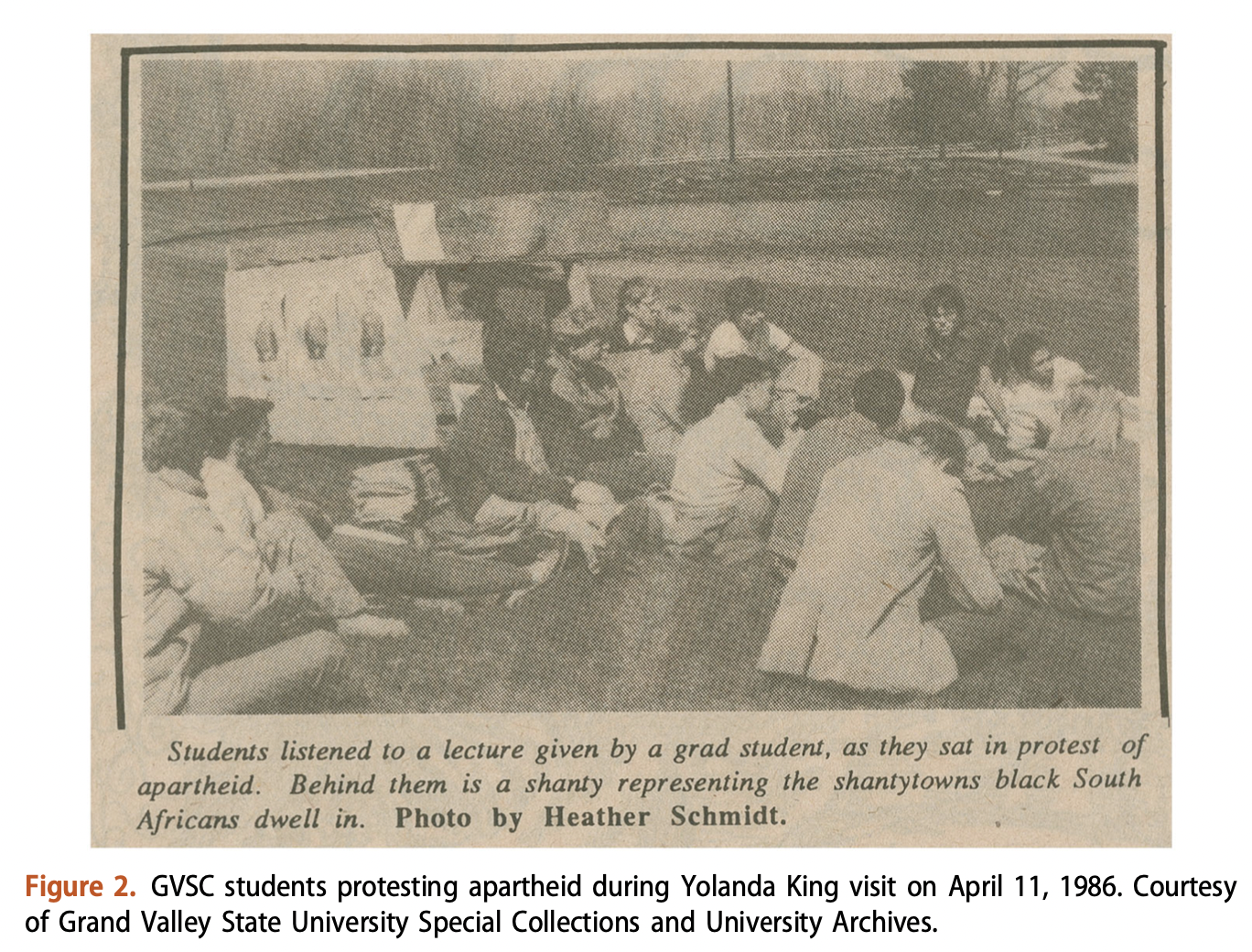
New article on the anti-Apartheid Movement at Grand Valley State College

We got permission to post this article, which was written by Eric Covey, who teaches in the History Department at GVSU. The article originally appeared in Safundi: The Journal of South African and American Studies.

“The history of the anti-apartheid movement at Michigan’s flagship universities— Michigan State University (MSU) in East Lansing and the University of Michigan (UM) in Ann Arbor—is well-known. Also somewhat well-documented are events at Western Michigan University (WMU) in Kalamazoo, which was the second institute of higher learning in Michigan to fully divest from South Africa, after MSU. Yet the anti-apartheid movement in the state’s western colleges and universities outside of Kalamazoo remains largely undocumented. Drawing on a small selection of archival documents, this essay explores the history of the anti-apartheid movement at Grand Valley State College (GVSC, now Grand Valley State University) in West Michigan, a region presently most well known for its conservative political climate. The micro-history that emerges from these documents is that of a campus movement that emerged relatively late compared to others, but which burned brightly in the context of major structural changes taking place at the college.”

To read the entire article go to this link.

Posted in Anti-Apartheid Movement | Tagged | Leave a comment

A People’s History of Grand Rapids book is now available

After years of research, interviews and archival materials, A People’s History of Grand Rapids is finally available.

Since Howard Zinn wrote A People’s History of the United States, there have been numerous books that have used his model to address the history of events of specific groups of people, but always on a national level. A People’s History of Grand Rapids is one of the first books that applies a history from below view of a specific community. In Smith’s book, people will learn about the struggle of Indigenous, Black and immigrant communities in Grand Rapids, and the organized efforts by workers, women and the LGBTQ community to win greater freedoms and equality.

In addition, there are chapters that inform readers of movements against war, environmental destruction, the exploitation of animals and police repression, along with movements for global solidarity. A People’s History of Grand Rapids presents readers with a rich tradition of social movements in West Michigan and properly frames their struggles against the systems of power and oppression that each movement was up against. A People’s History of Grand Rapids is a book that counters the official narrative about this community, and it can inspire people by seeing that they have not been alone in the fight for justice where they live.

You can purchase A People’s History of Grand Rapids at Schuler Books. If you want a PDF version of the book, just send an e-mail to sjeff987@gmail.com.

Posted in Uncategorized | Leave a comment

Revolutionary Anarchist Youth zine highlights benefit show in Grand Rapids for political prisoner Geronimo Pratt in 1996

The following post is the second in a series using archival documents from Cole Dorsey, a longtime activist/organizer in Grand Rapids and the Bay Area in California.

Below is a page from one of the many zines created by the Revolutionary Anarchist Youth (RAY), an anarchist group in Grand Rapids that existed in the mid-1990s.

There was a punk benefit show in the fall of 1996 to raise money for the US political prisoner known as Geronimo Pratt. Geronimo Pratt was a member of the Black Panther Party for Self Defense, who was a target of the FBI’s counter-intelligence program known as COINTELPRO. Pratt spent 27 years in prison for being part of the Black Freedom Struggle. He was eventually released in 1997.

Raising money at benefit shows has always been a major tactic of anarchists, both as a way of raising awareness about political repression around the world, but also as a mechanism to provide Mutual Aid for political prisoners.

In addition, these events were always a great opportunity to talk about local organizing, as is reflected in the page 24 from the RAY zine here below.

Posted in Uncategorized | Tagged | Leave a comment

Revolutionary Anarchist Youth flyer on the Amway co-founders

Editor’s note: A dear friend and comrade, Cole Dorsey passed away recently and one of his family members passed along some of the archival materials he saved, which is what this post is about.

In the mid-1990s, the group Revolutionary Anarchist Youth (RAY) was active in Grand Rapids, doing important organizing work, along with disruptive actions and providing an analysis of politics in Grand Rapids. We came across this flyer/handout which addresses not only the wealth and greed of Amway co-founders Rich DeVos and Jay Van Andel, it talks about how the increased investment from the Capitalist Class in downtown Grand Rapids impacted the surrounding neighborhoods and increased police presence, which disproportionately impacted Heartside residents and dissidents, like the members of the Revolutionary Anarchist Youth.

Here is the flyer/handout that we believe was from 1996.

Posted in Anti-Capitalism/Labor, Indy Media | Tagged , , | Leave a comment

Just after the Depression years, the Grand Rapids City Government provided direct relief and created a public works project for those unemployed

The great depression that began in 1929, happened all across the globe. Grand Rapids was not immune to the devastation brought about because of the economic catastrophe.

However, during the depression years, there was one elected official who implemented New Deal-like policies, policies that provided relief to hundreds of families in Grand Rapids.

George Welsh was Mayor in Grand Rapids when the country was just coming out of the “Great Depression. According to Z.Z. Lydens book, The Story of Grand Rapids, Mayor Welsh wanted to do something to address the growing unemployment problem in the city. According to Lydens:

There were ominous moments when masses of men milled in front of City Hall, men who were seeking rescue from their jobless plight and the unmet needs of their families. Communist instigation was suspected, but the need was too obvious to call for instigation beyond need itself. To help the hungry, the unsheltered, and the unclothed, Welsh, supported by the City Commission, created all manner of public works. He adopted the philosophy that a man had a right to save his honor by working for his keep. Welsh instituted a script system of wage payment and set up a municipal food store, scrounging food where he could.

Lydens goes on to say that the city was taking care of 20,000 men, women and children through this New Deal-like program.

According to the Grand Rapids Historical Commission

Instead of money each laborer was paid about fifty cents per hour in scrip coupons which could be used at stores set up by the city. Scrip labor was not unique to Grand Rapids, but the extent to which it was used was unprecedented. The projects included snow removal, Grand River bank cleanups and dredging, demolition of old city buildings, cleaning and salvaging of materials from demolished buildings, the building of the Civic Auditorium, painting City Hall, shoe repair, canning foods, and the building of Richmond Park Pool and Bath House.

The photo above shows workers who participated in this script system that Welsh had set up. (Photo care of Grand Rapids Historical Commission)

This example of what the City of Grand Rapids did during the depression is rather instructive. First, it demonstrates that the city can and did use government resources to provide material relief for thousands of families, putting people to work that would ultimately benefit the city as a whole. It also demonstrates that in times of crisis, social charity is not the only form of relief and that municipalities can play a significant role in making sure that those who are the most vulnerable and most marginalized deserve support beyond social services.

Imagine what the City of Grand Rapids could be doing right now, if it implemented a public works project so that families could get their basic needs met. What would the city look like if there was an equal amount of funding utilized for public works projects as is provided as subsidies and tax breaks for developers?
Posted in Anti-Capitalism/Labor | Tagged , , | Leave a comment